Today: Adventures in Croatia
Another Catholic Church – slightly less ornate – Magnificent, almost unearthly vocal performance, female soloist with ambitious plans for a professional career, older hymns, some contemporary sacred music, very unusual organ (music accompanying several hymns). Again, surprising numbers of fellow cruise members resorted to distractions of their “devices” during this second church concert. Later one woman complained “I’m sick of all this historical stuff, going into churches and castles…I’d rather see grocery stores, go shopping and things like that!”
Well, to each his own! As far as grocery stores go, I don’t recall seeing (in all this time) a single store equivalent to our ubiquitous supermarkets (U.S.) Instead what I’m most accustomed to encountering all over Europe, in the smaller cities and towns: modest, often locally owned neighborhood markets, with (often) local produce, and lacking the numbing variety of mass– produced choices in “super” or “Big Box” stores. And this discontented lady may be one – like myself – who relishes the simplicity and neighborly feeling of those village markets or (in cities) the little corner stores in one’s residential area, where one goes to shop for bread, coffee, etc., and meet neighbors, and greet the manager (who might well be the owner).
It was easy to connect personally with the Croatian Tour leader, quite lucid in his carefully acquired, accented English, amusing palaver (like a TV comic) but plainly quite a serious student of history. I suspect many fellow passengers lost the thread (or got bored with) the very complicated Tales of Balkan Grief and Woe; some resorted to their “devices” as during the church performance. But I thoroughly relished the history lesson, having immersed myself in the subject for several years, since having met and before been befriended by a Serbian–American living in my own Senior Independent Living complex.
Particularly appreciated learning from a local citizen the experience of Croatia, its small towns, homes and other structures bearing scars from the War of Independence from Yugoslavia post-Tito’s regime.
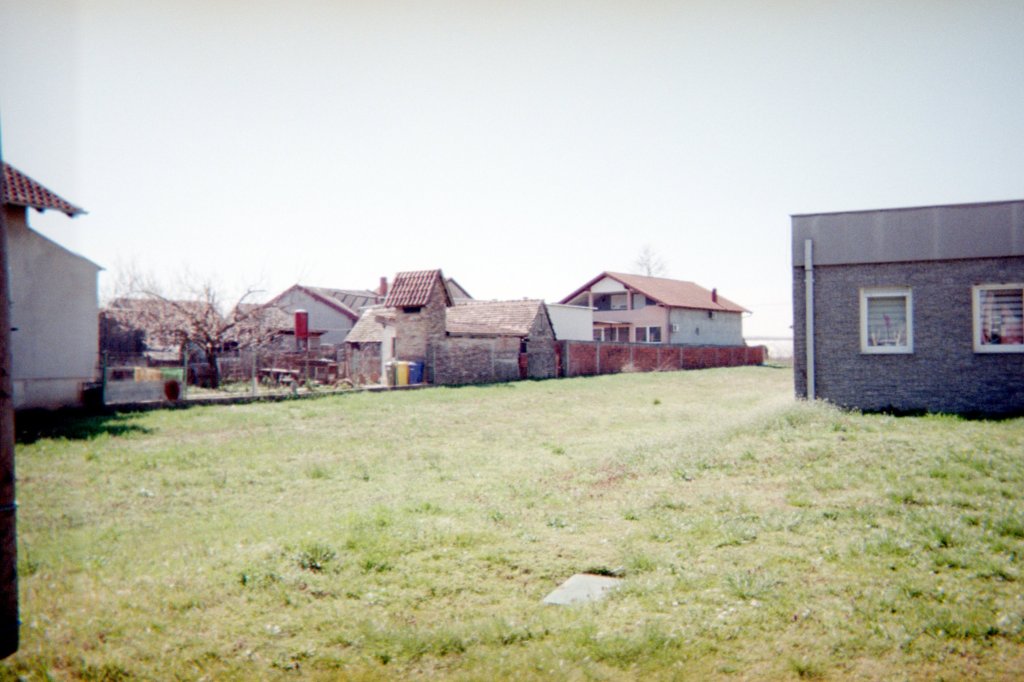
He lamented frankly, as well (“not to push the truth under the carpet”), the serious problems of corruption, shrinking currency value, tragic lack of support for the poor and elderly … I was moved by his humility and honesty, impressed by his devotion to learning and teaching history.
I complimented him afterwards, expressed the hope he would continue nurturing his passion to the benefit of all he encountered – whether tourists or his own (university) students.
Onward in the bus … past absolutely flat fields, brimming with green, growing grain and (later) sunflowers, part of the vast Hungarian plain “Wallachia” – think Kansas! Fertile beyond description.

Visiting a Croatian home. Endearing encounter with an affable older couple, lots of photos of kids and grandkids, delicate, lemony little cakes, tea, the very strong coffee flavored by locals, warm smiles, brief moments of awkwardness but not really discomfort …
The hosts had no English, so our translator conducted diplomatic Q and A … However, Busy-Body Lyndie noticed no one was asking the gracious old couple about their children in the prominently displayed framed photos! So bringing that up was magic. Got the conversation flowing again!
Unfortunately the general exchange (15 of us) soon descended into a tired replay of the Endless Balkan Wars, a noisy discussion which left little focus on our hosts, and was dominated by one particularly loud, aggressive, opinionated guest, who did not have all his facts straight. There were too many inaccurate assumptions among us!
I felt badly as a wannabe peacemaker, tried to steer us towards “hopes for the future, for the children” (pointing across the table at all the photographs). But failed.
The group drifted outdoors to look at the garden, accompanied by the man of the house. I was tired and asked the hostess in my broken Serbian–Croatian if I could simply sit with her. She seemed tired as well. She lit up at my request.
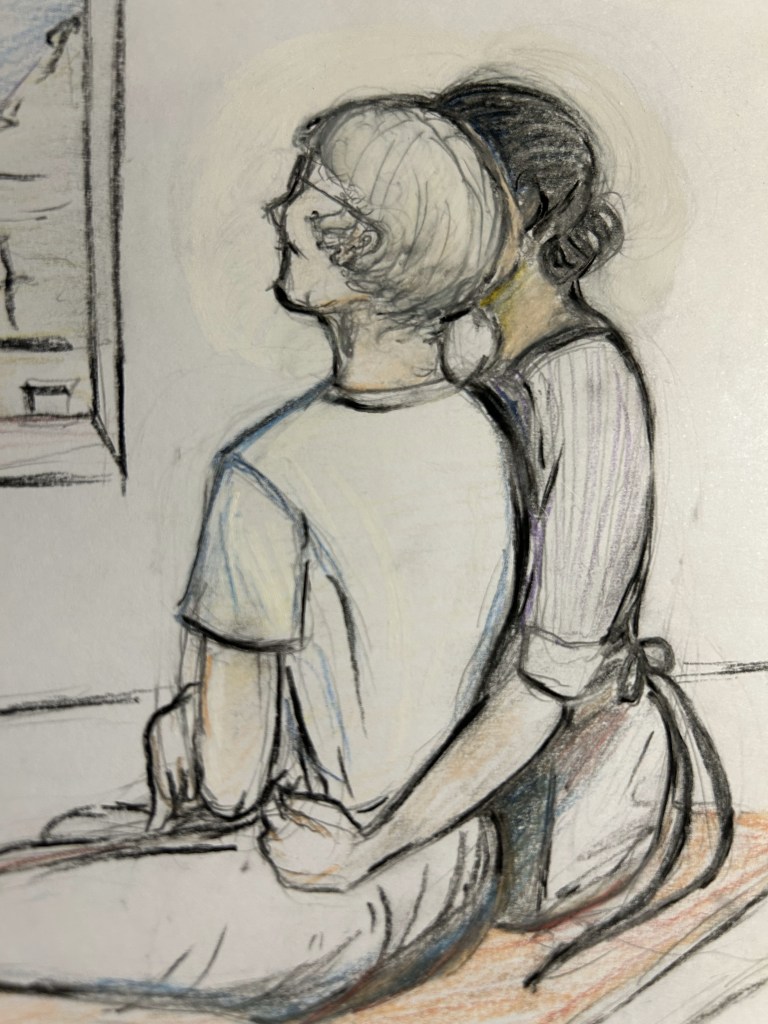
We sat quietly together for about 20 minutes in the tiny parlor, while her husband led the garden tour. She held my hand tightly and was so irresistibly motherly I laid my head (white–haired like her own) on her plump, warm shoulder.
She beamed, and held me tighter. I spoke barely any of her language; she had no English. But it was the closest and most peaceful of interludes. We rested in each other, two weary old grandmothers. One of the best moments of the journey. Hard to forget.
Re-boarding the bus, we drove further into the countryside, reaching a peaceful village square, where I opted to wait for the others while they toured a gloomy and decrepit old military fort and barracks.
Having just survived a wearisome replay of the Balkan wars, I decided instead to sit in a pleasant, shady outdoor café, lovely trees leaning over me, and people-watch for a while. The courteous Croatian waiter took my order for a “limonada” which turned out to be utterly delicious, the kindly wait-person refusing a tip with a smile.
The others in my group retrieved me as promised and we went on. Several chivalrous foreign gentlemen took turns guiding me safely up and down steps. (Actually, I was the foreigner!)
If you have just come to the journey at this point, please start the chronicle from the beginning to learn the rest of Lyndie’s fascinating story.
Lyndie sacrificed the experience of a previous journey on the Danube, for which she spent most of her life savings, to help a blind companion who had fallen ill. You can read more about this in Chapter 3.
Friends and strangers have raised nearly $3000 to help Lyndie (re)live her ruined dream of a trip to Eastern Europe. We are still working to restore her depleted savings. To learn more and (if you can) contribute any amount, please click here.
 Lyndie's Journey